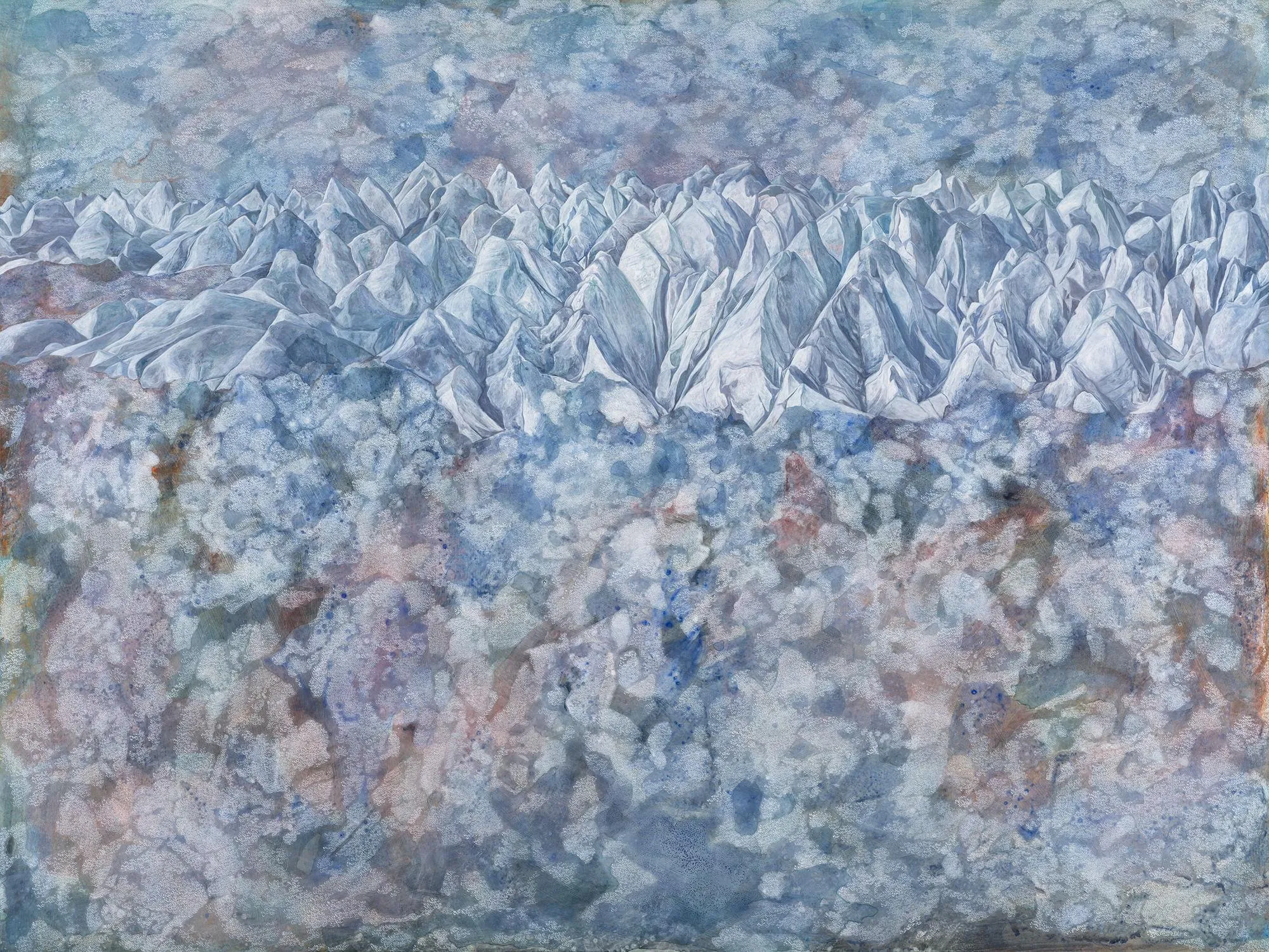
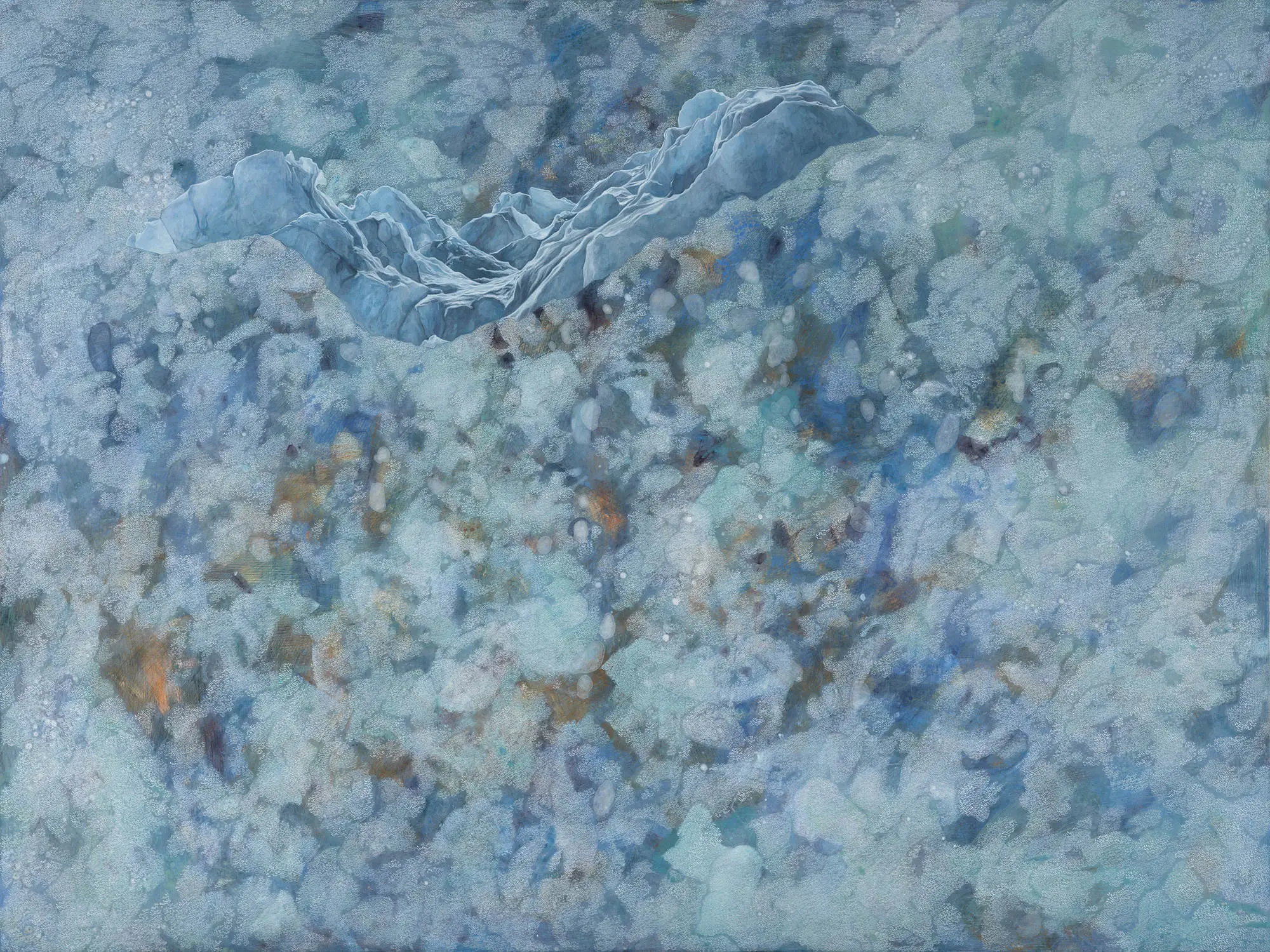
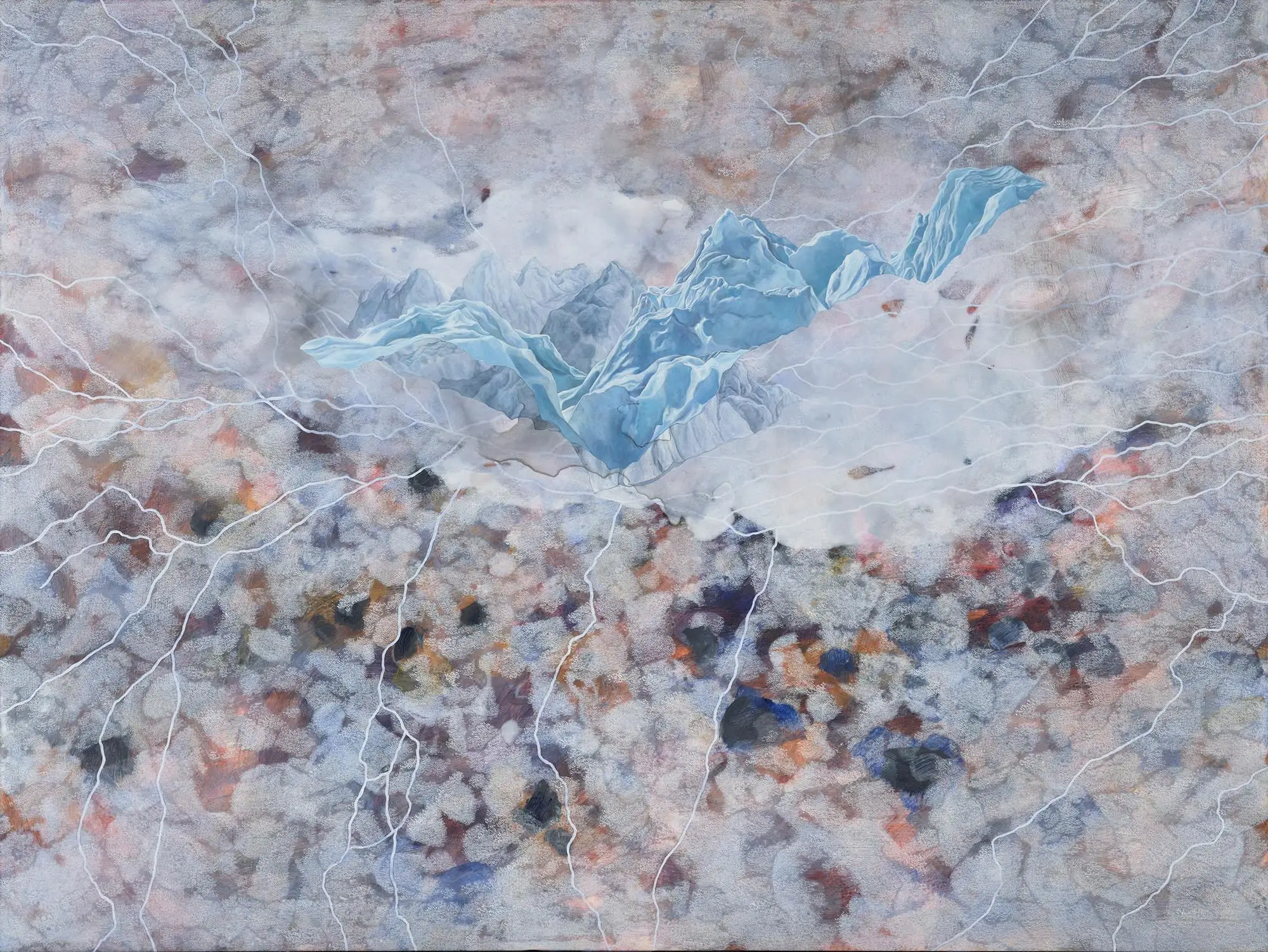
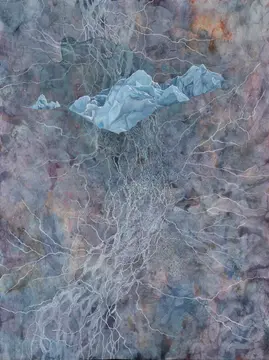
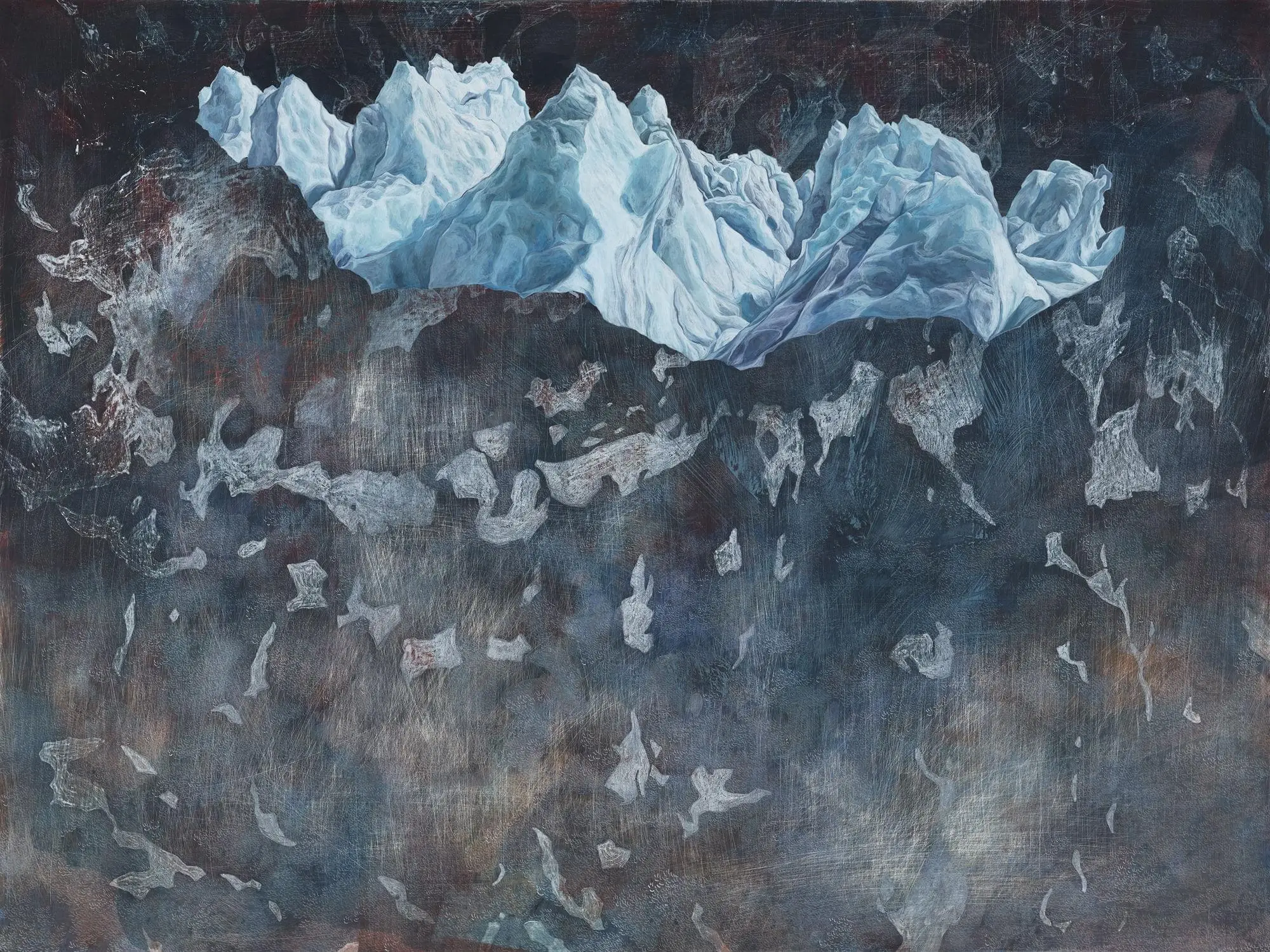
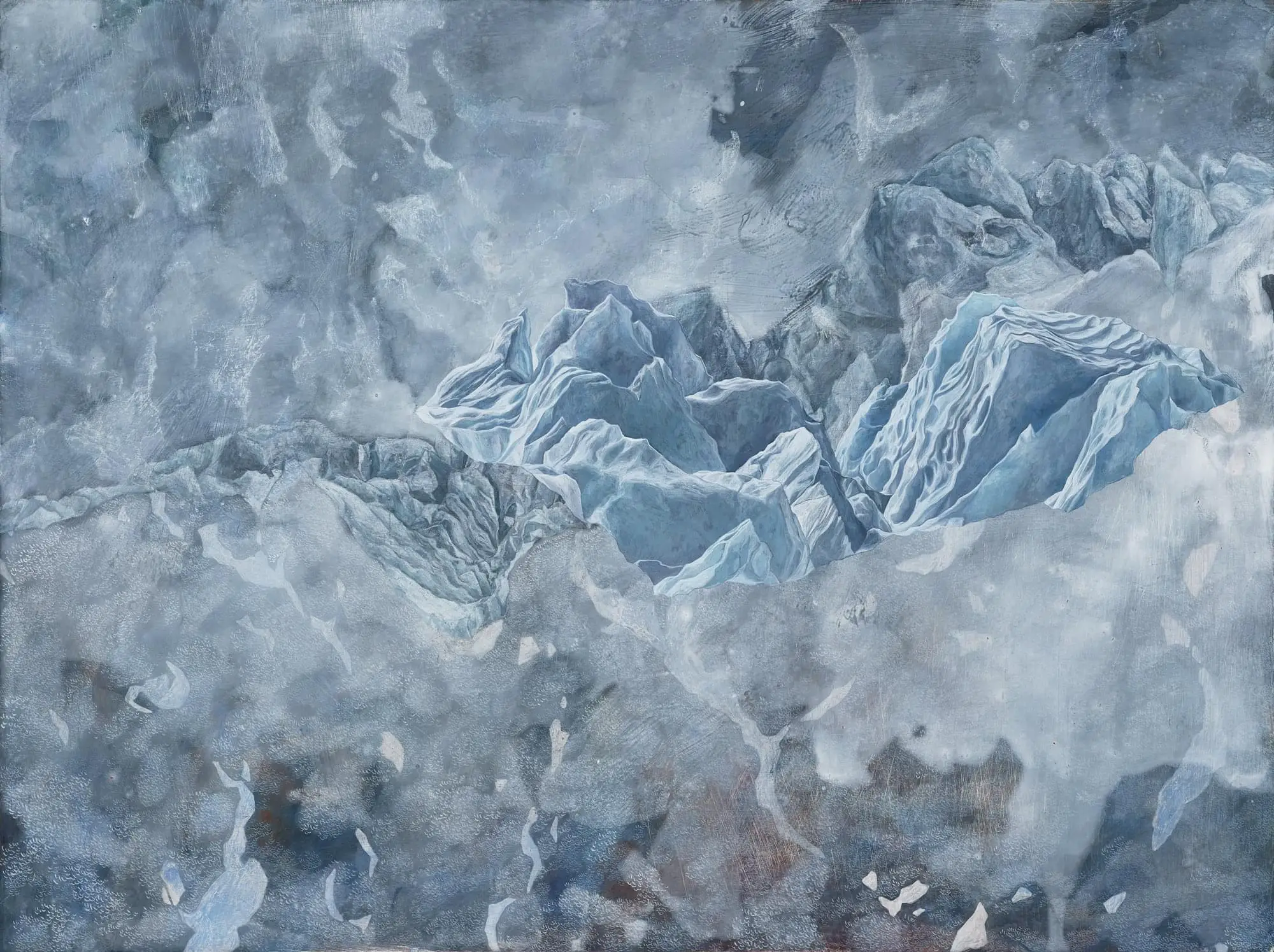
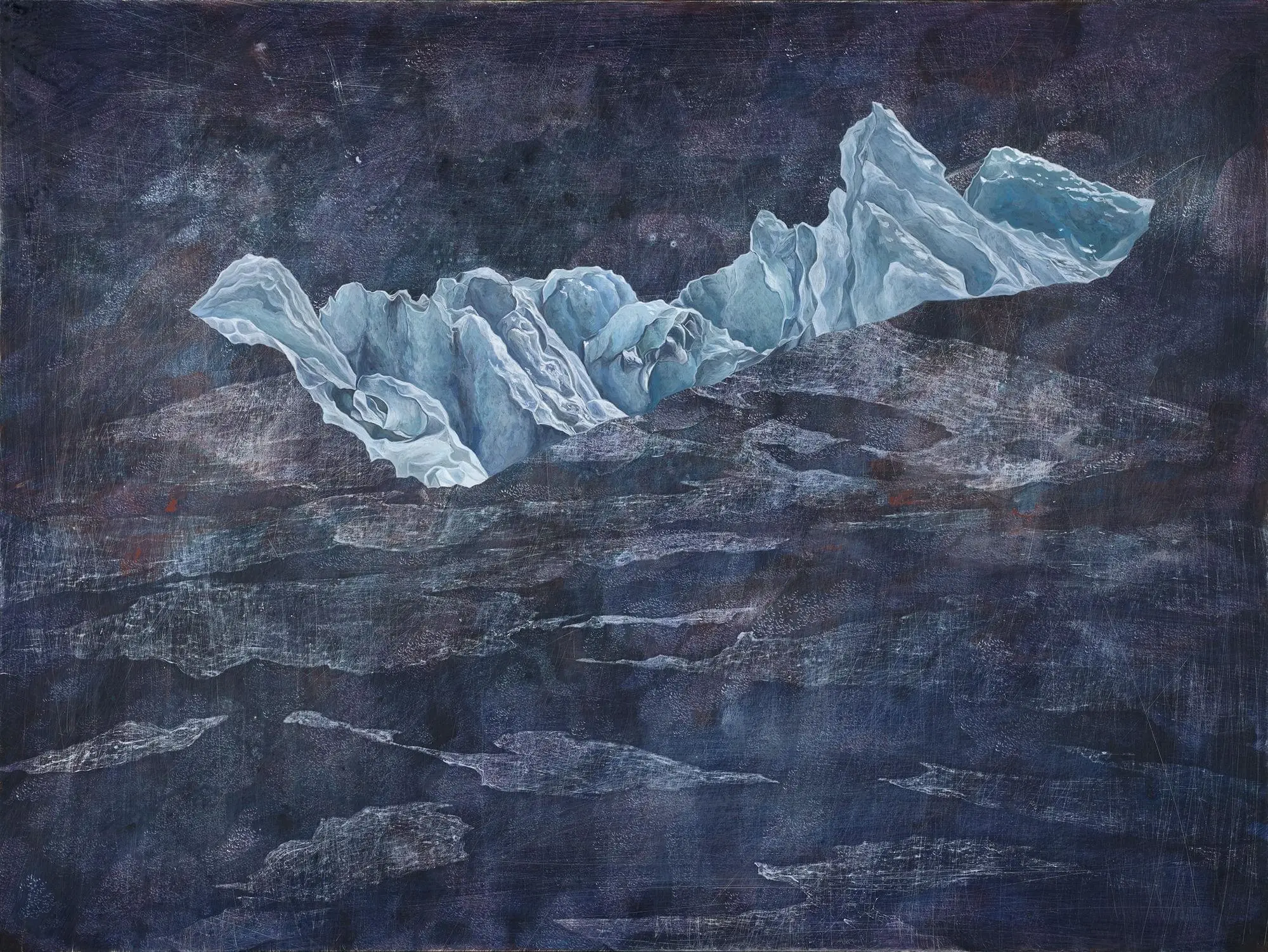
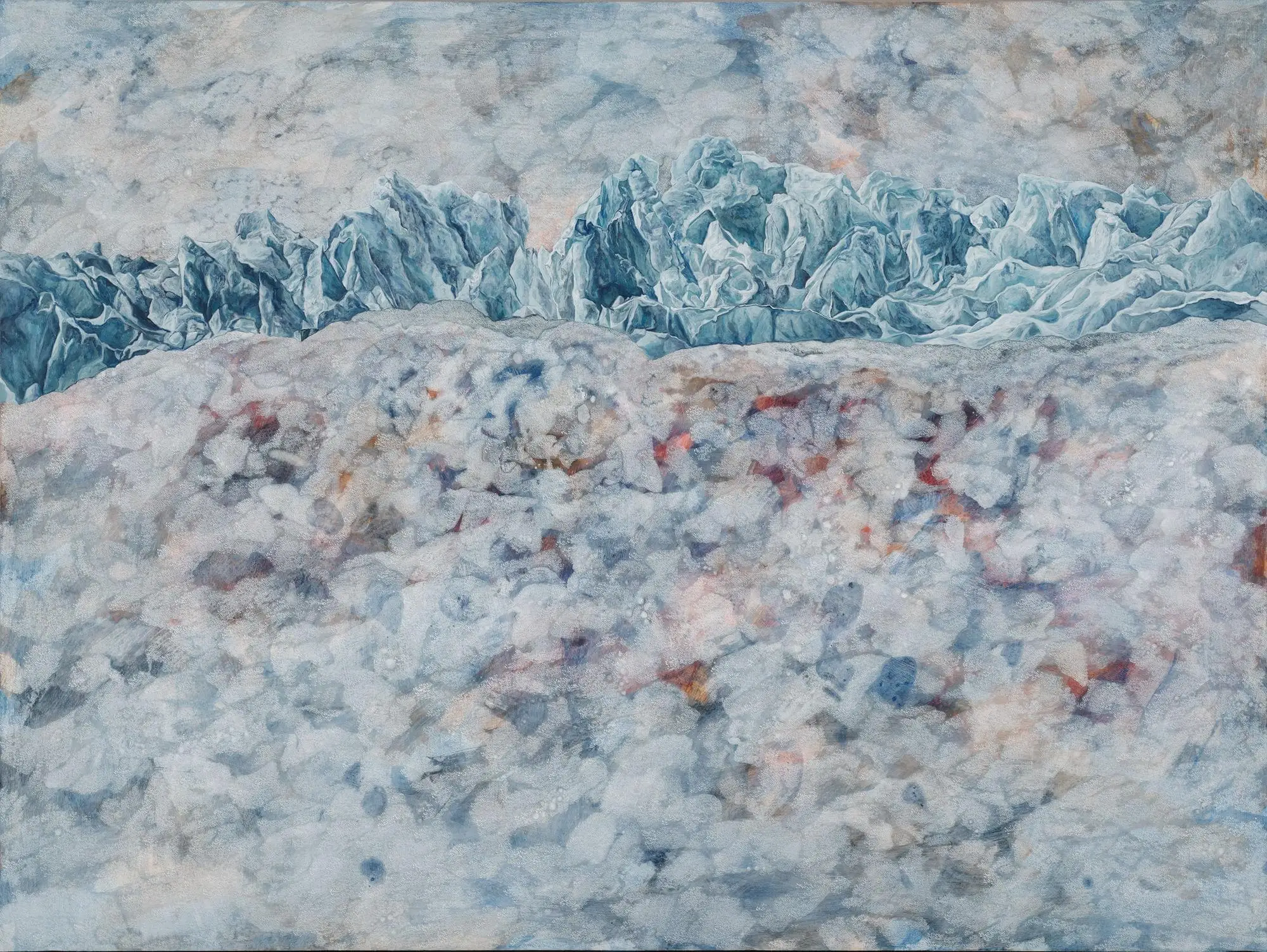
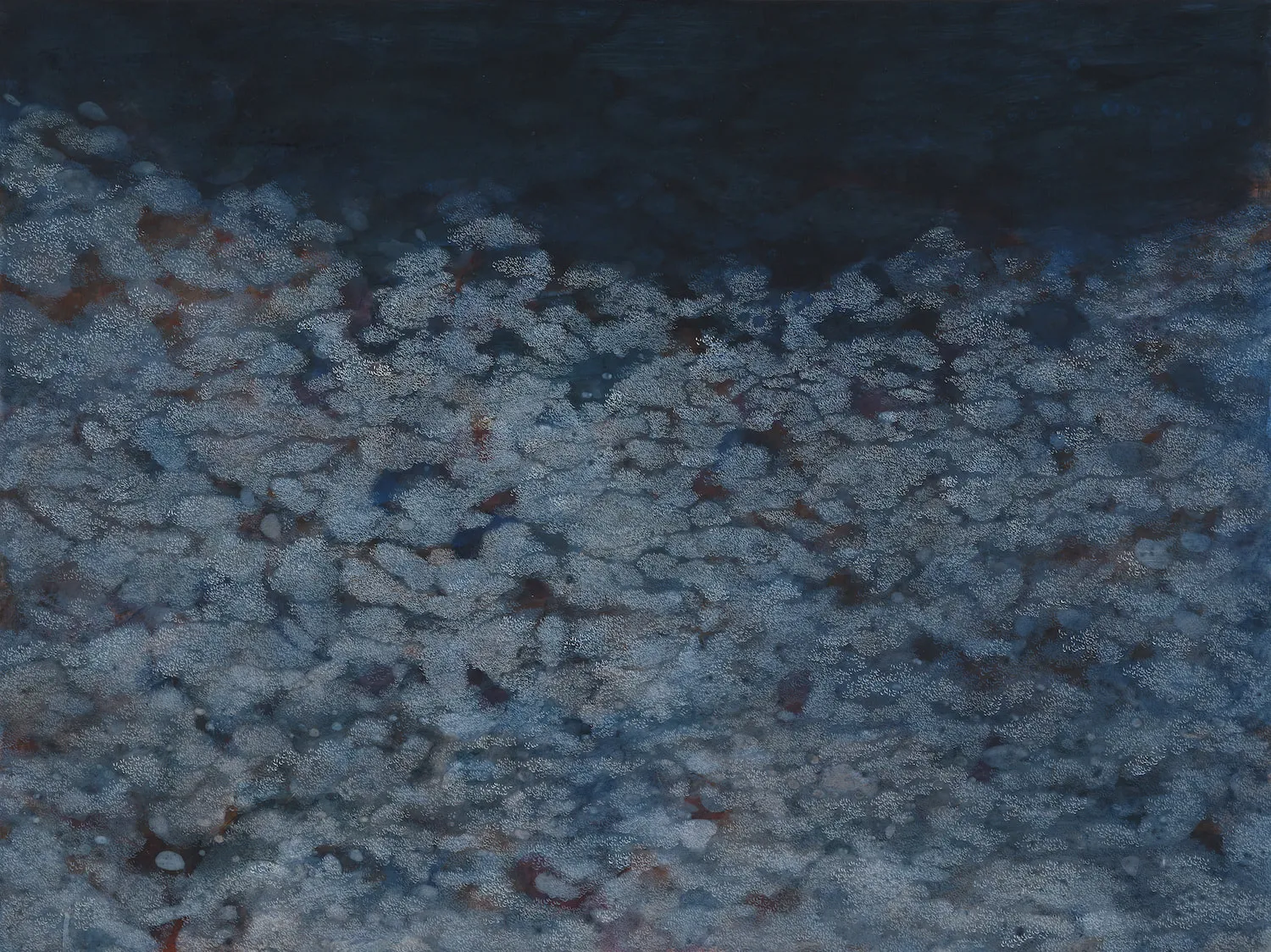
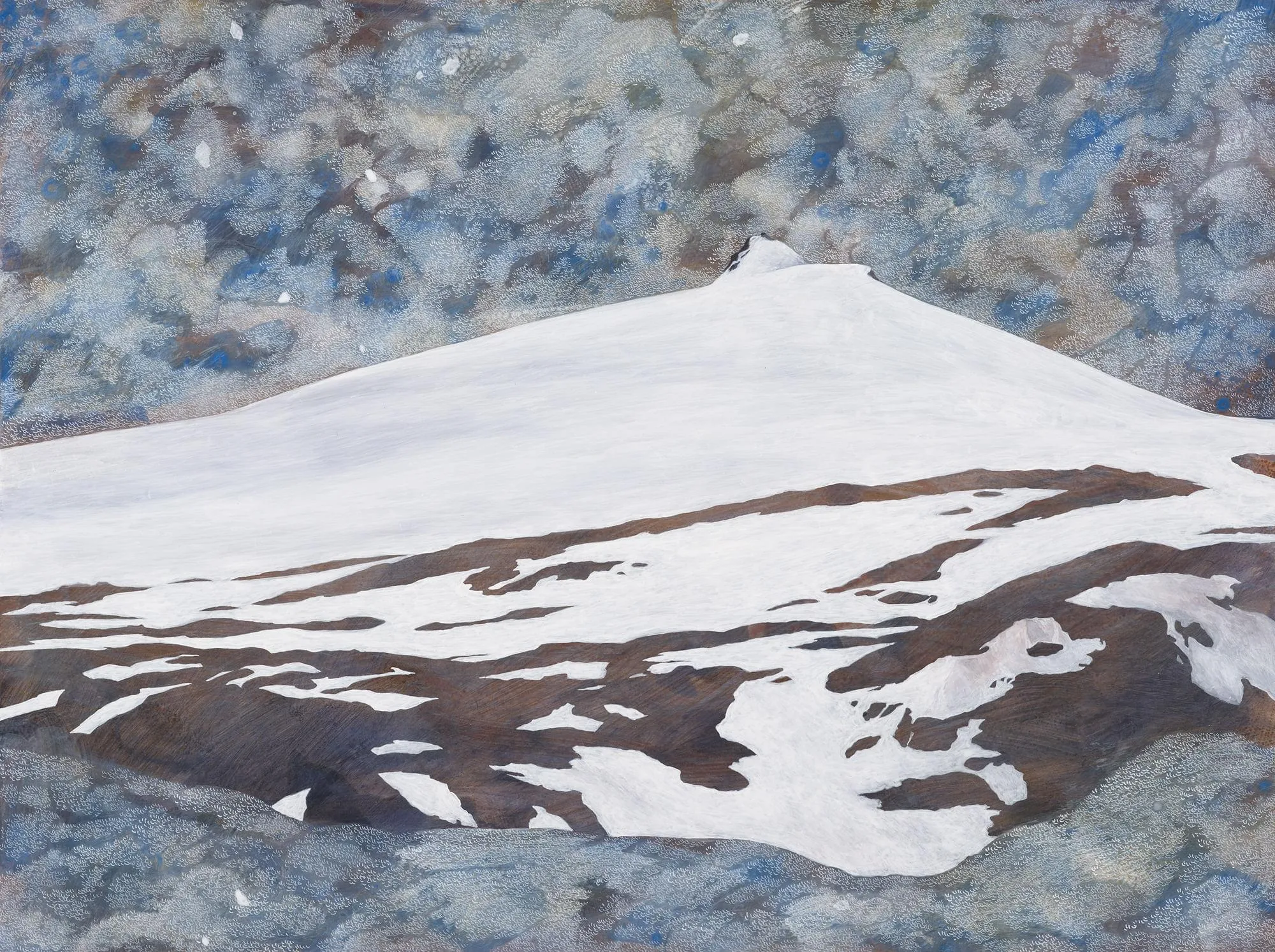
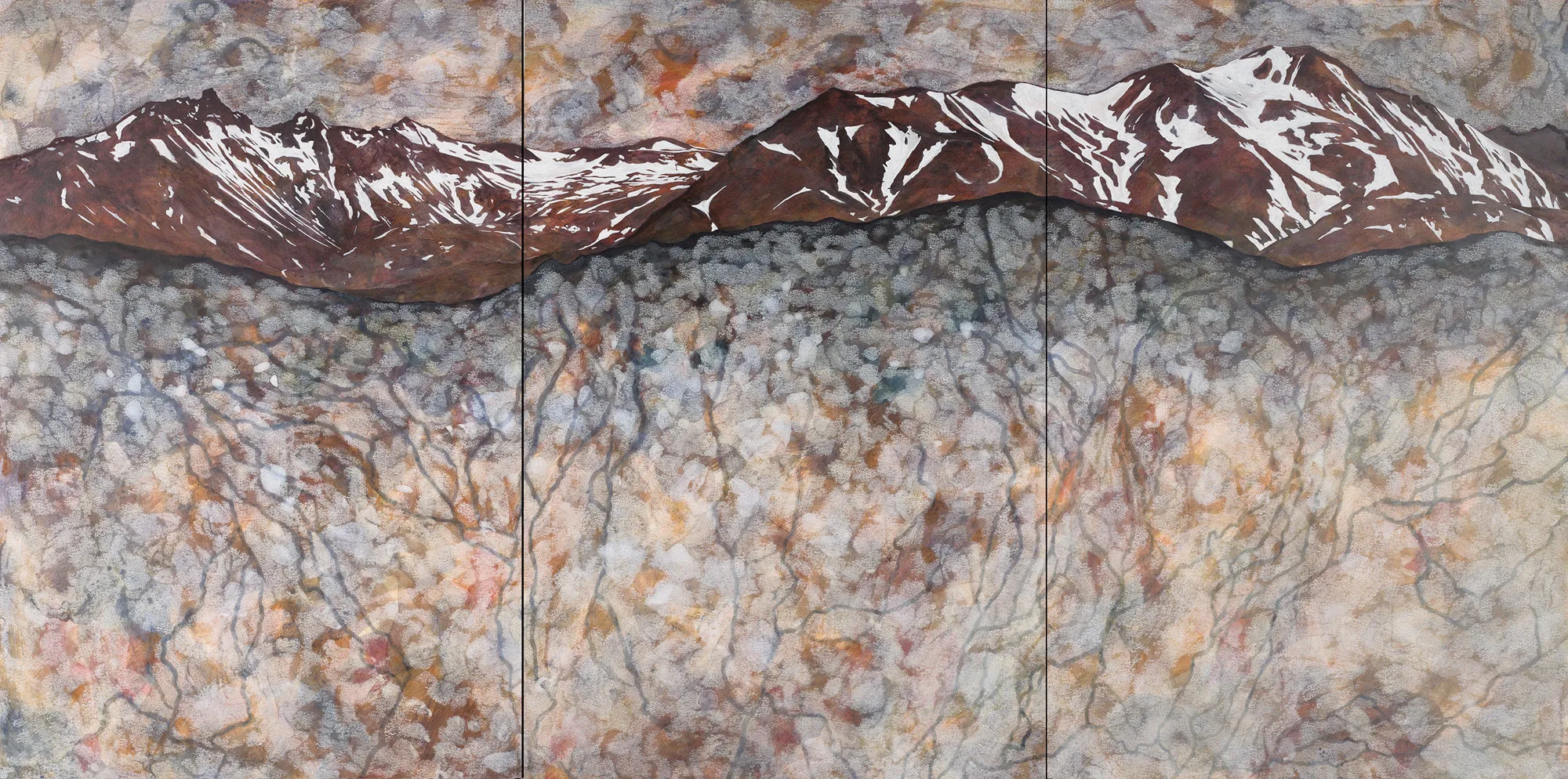
Meltwater, 2024 ongoing
Glaciers are rivers of slow moving ice that were formed during ice ages thousands, sometimes millions of years ago.
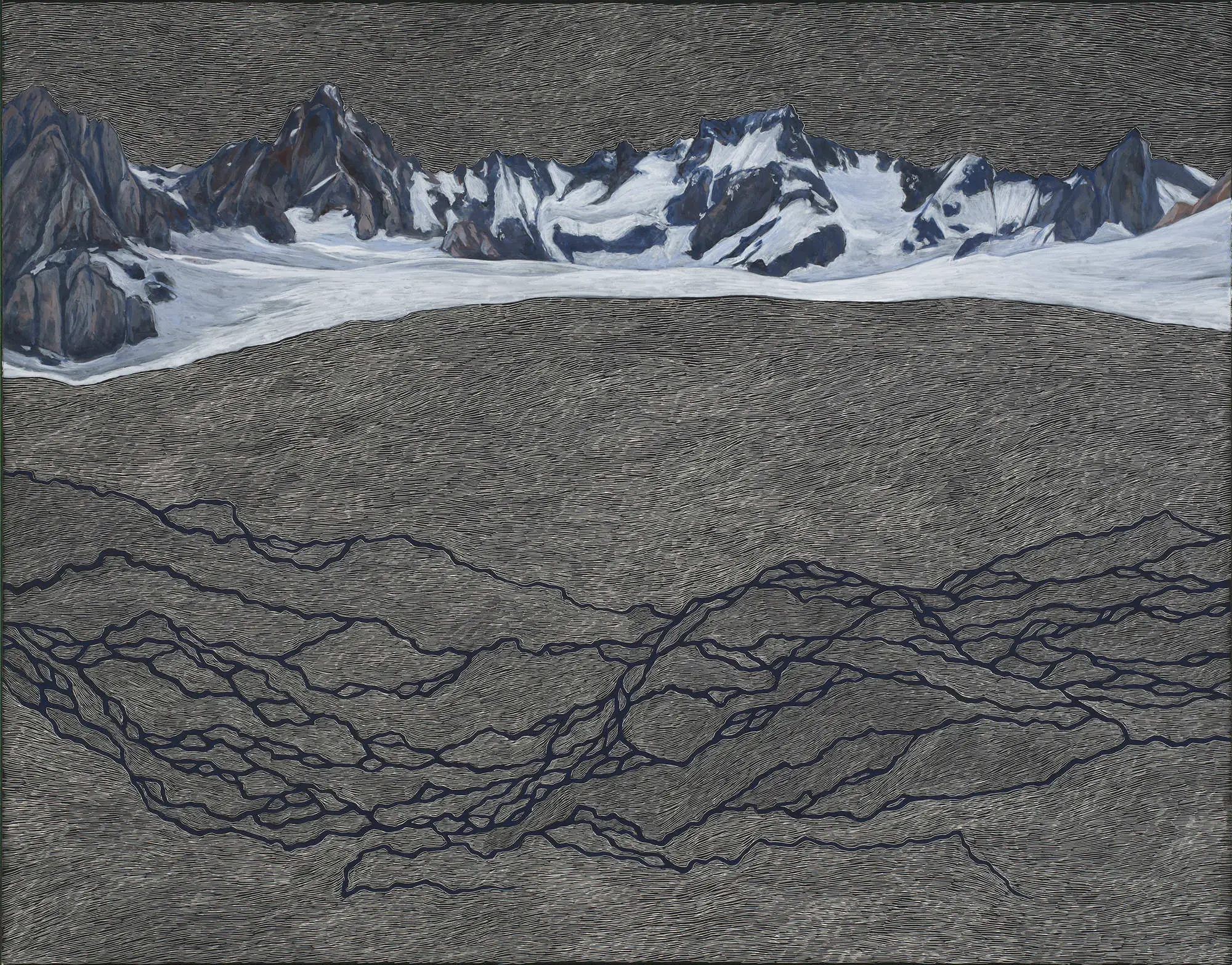
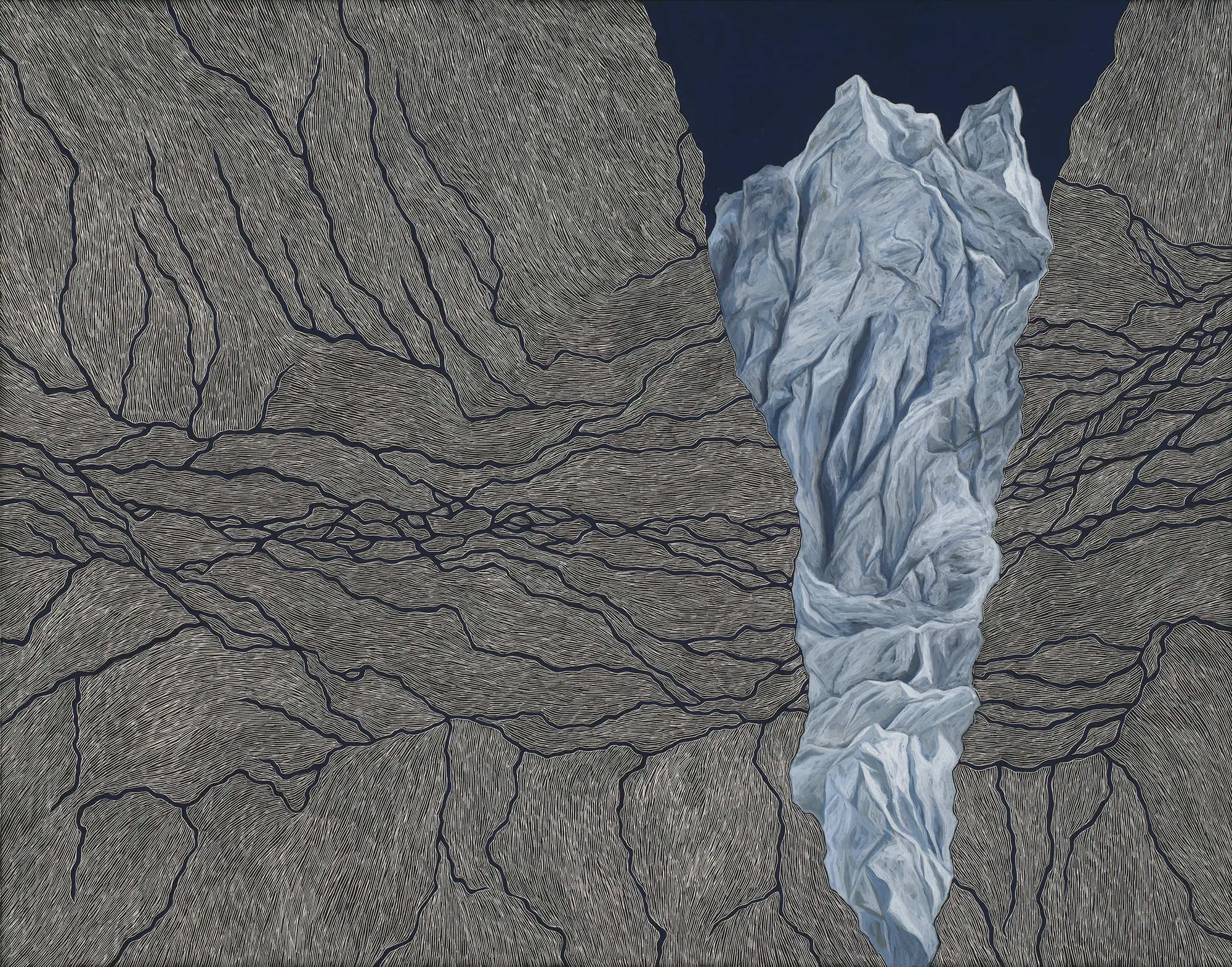
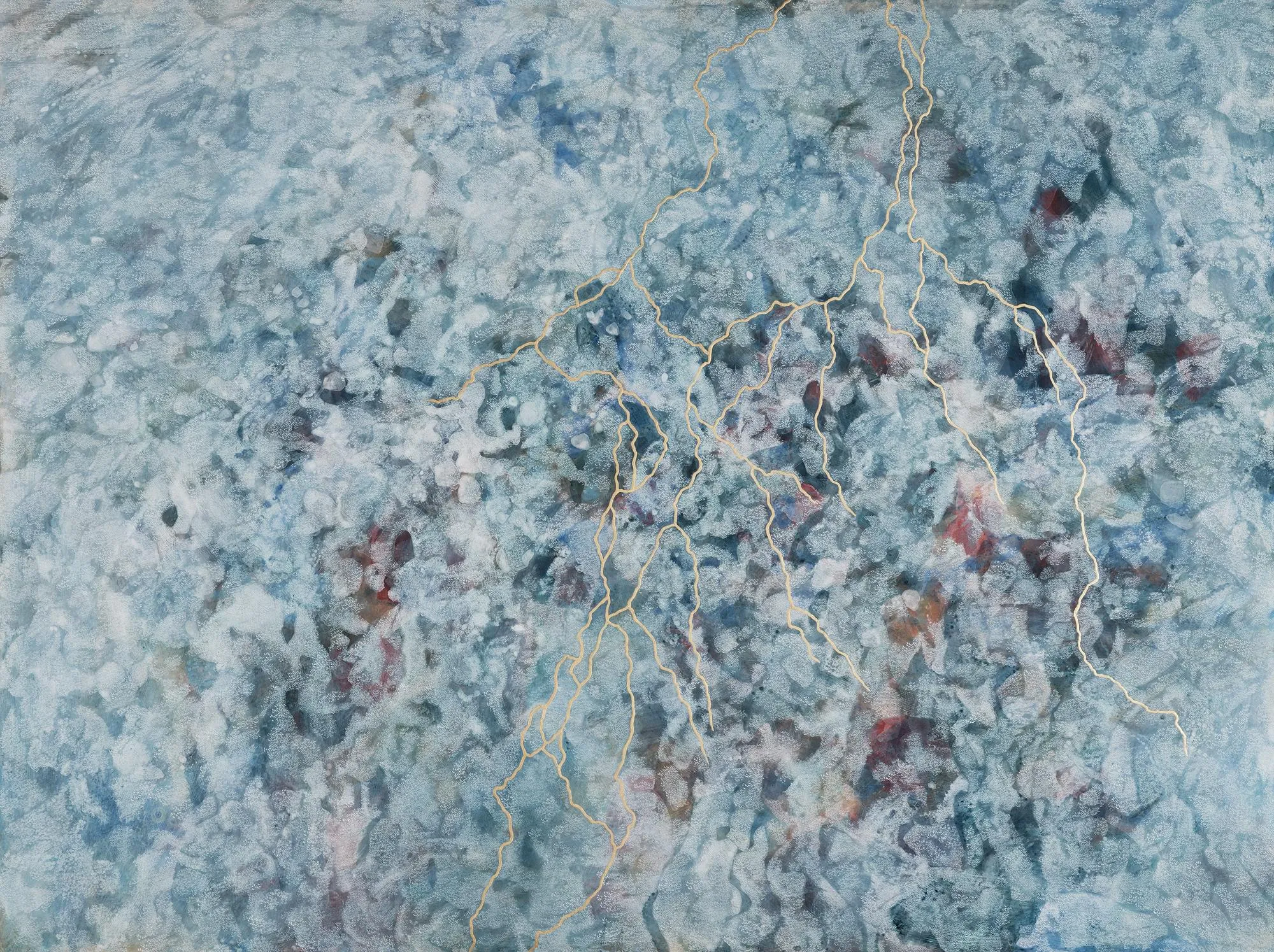
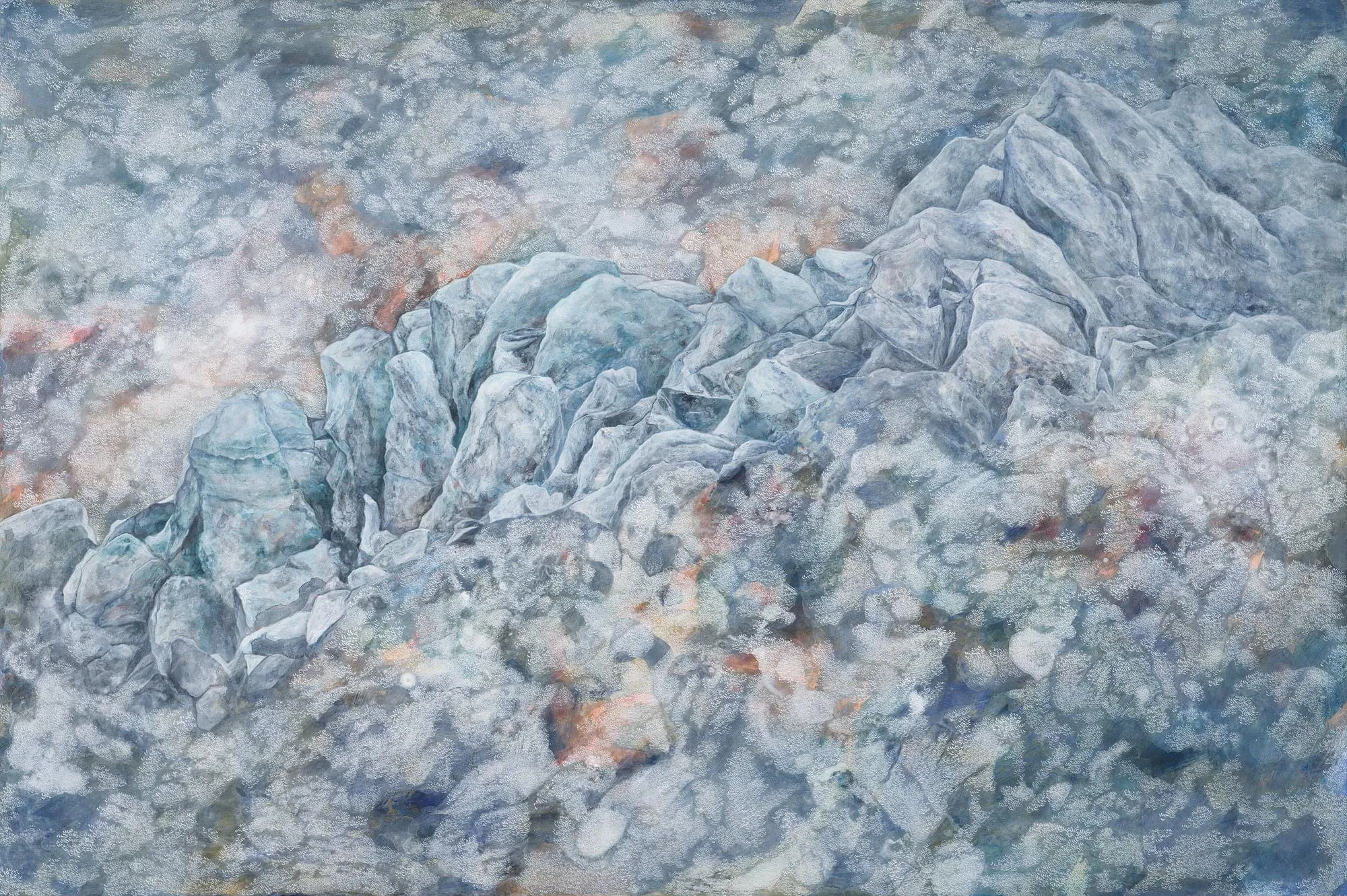
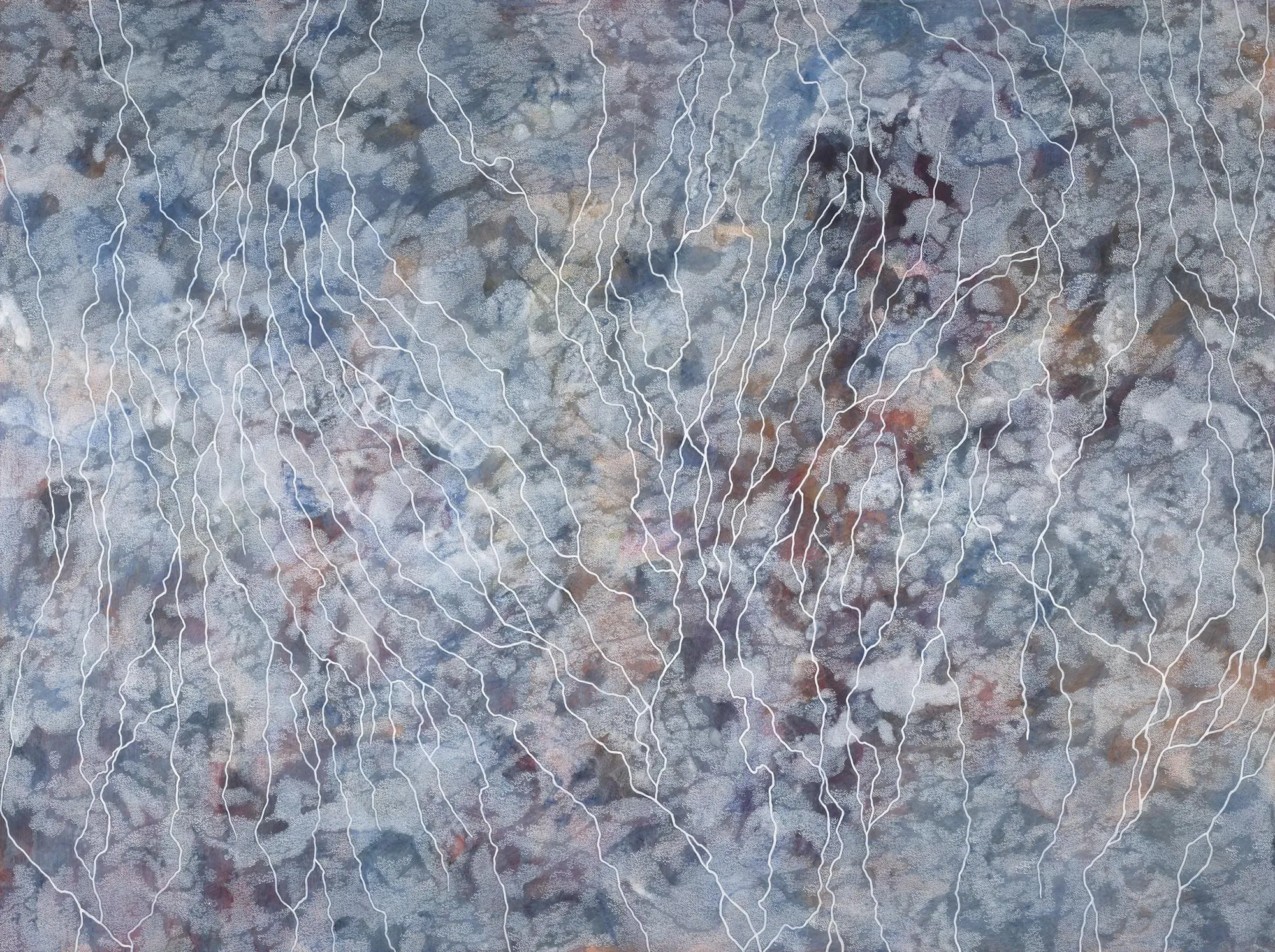
Over the past 3 years I have been researching glaciers with field trips to New Zealand and Iceland allowing me to get up close, to witness, draw and experience them first hand. I am interested in the effects of climate change on the melting of glacier ice and how that might be represented through painting. The experience of sitting still, watching and listening as the ice imperceptibly transforms in front of me is compelling. The sheer beauty of the surface with its wrinkled sculpted skin, the scale of the rivers of ice plummeting down from 2,000 metres to sea level in a space of just a few kilometres and the overwhelming sense of vulnerability and fragility is mesmerising. One of the things that strikes me so profoundly is the sense of movement and life that is captured in the stillness of the sculptural forms, created by the constant sounds of running meltwater beneath the ice, the groaning of shifting ice within its belly and the occasional collapse of the seracs.
Glaciers are fragile ecosystems existing in a constant state of flux and are deeply affected by changes in the earths warming. I think of glaciers as living entities that deserve our respect and protection in order to survive, just like any other living being. As we well know, glaciers are rapidly melting and receding as a result of climate warming; 80% of the world’s glaciers will be extinct by the end of the century and many in Europe will have disappeared within the next 10 years. These changes are not just aesthetic - they signal a profound destabilisation of mountain ecosystems. In the 19th Century Sublime, glaciers were perceived as symbols of the threatening power of nature but are now symbols of fragility and urgency in the face of a catastrophic ecological disaster. To remember what the glacier was like in the past and what it might become in the future suggests a haunting melancholy. In recent years glaciers have become sites of grief and remembrance, as Icelandic author and climate activist, Andri Snær Magnason asks “How do you bear witness to the death of a glacier?”
The paintings shift between abstraction and figuration as I bring together different viewpoints including aerial mapping of the vast, sediment rich, braided river systems flowing from the melting ice and remnant fragments of the sculptural forms, the crevasses and seracs of the glacier in a precarious state of collapse and floating in their own meltwater. The remnant ice holds the memory of glacial time – thousands of years suspended precariously in the present moment. The notion of the fragment conjures a state of something being broken, in this case the ecology being out of kilter. It holds the climatic, geological, ecological and cultural story of ice as well as a fragment of the broader landscape, telling the story of what is at stake and what the potential loss is.
This series is both a sensory and poetic tribute to the life and voice of glaciers. The paintings celebrate the ‘being of ice’- the life and energy of glaciers as archives of impermanence, while also drawing attention to their precarity.
My solo exhibition, Slow Moving Ice, was held at Gallerysmith, Melbourne, 16 July - 8 October, 2026
My solo exhibition, Meltwater was exhibited at Bett Gallery, Hobart in December 2024
https://www.bettgallery.com.au/exhibitions/339-sue-lovegrove-meltwater/